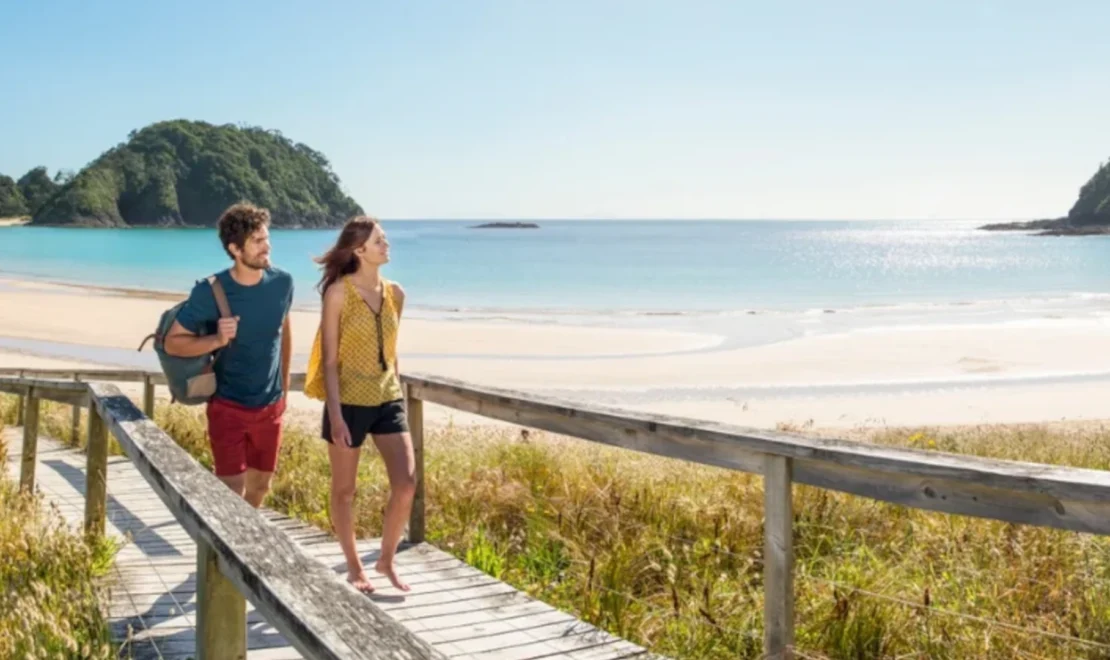
Ask most Kiwis where they’d go for a winter weekend away and Tutukaka probably isn’t the first name they’d mention. That’s exactly why it should be yours. Tutukaka in winter is a genuinely different experience – quieter, more intimate, and in some ways more rewarding than the peak-season version that everyone else is chasing. The crowds thin out, the beaches become yours again, and the kind of slow, restorative break that’s hard to find in summer becomes entirely possible. Add in world-class diving with extraordinary visibility, dramatic coastal walks, and the deep comfort of a well-appointed self-contained villa, and you have all the ingredients for one of the best off-season escapes in New Zealand.
If you’ve been putting off a Northland in winter trip because you assumed it wouldn’t stack up, this one’s for you.
Why Tutukaka in Winter is an Underrated Northland Experience
Northland sits at the top of the North Island and earns its reputation as the “winterless north” for good reason. Winter temperatures on the Tutukaka Coast sit between 10°C and 16°C. It’s cool enough to feel like a proper change of season, but mild enough that outdoor activities remain comfortably on the table. There’s no snow, no frozen ground, and no reason to stay inside.
What winter does deliver is a version of Tutukaka that regular summer visitors rarely get to see. The beaches are empty in the mornings. The coastal walks are cooler and more energising. The marina feels like a working fishing village again rather than a tourist hub. Sunsets over the Poor Knights come earlier and hit differently with dramatic skies, low golden light, and not another soul on the headland to interrupt the view.
For couples and small groups who value atmosphere over activity count, winter at Tutukaka is a revelation.
Diving and Snorkelling Year-Round: Why Winter is Actually Great for the Poor Knights
This might be the most surprising thing about a Tutukaka winter: if you dive or snorkel, the off-season might actually be the best time to visit the Poor Knights Islands.
Dive! Tutukaka runs trips to the Poor Knights Islands every day of the year, and their own data makes the case for winter clearly. From May to early September, visibility at the Poor Knights regularly exceeds 30 metres, which is significantly better than the summer average of around 20 metres, when warmer plankton-rich water reduces clarity. Water temperatures drop to around 15–16°C, which is comfortable in a good wetsuit, and the winter calm brings periods of glassy, settled seas that make the 45-minute boat trip out a pleasure rather than an endurance test.
There are other winter bonuses too. You’re more likely to spot fur seals in winter, and on calm days the low winter sun angle lights up Rikoriko Cave (the world’s largest sea cave) in a way that summer visitors simply don’t get to experience. The boats are quieter, the crew have more time for you, and the sense of having one of the world’s great dive sites largely to yourself is hard to put a price on.
For non-divers, the Perfect Day sightseeing and snorkelling cruise runs year-round and remains one of the best ways to experience the Poor Knights without needing a dive qualification. Check conditions before you book and be flexible with dates (winter weather can occasionally cause cancellations) but when the sea cooperates, a winter day out at the Poor Knights is unforgettable.
The Best Winter Walks on the Tutukaka Coast
Winter is arguably the ideal walking season on the Tutukaka Coast. The air is crisp, the light is softer, the tracks are uncrowded, and the native bush is alive with birdsong. Here are three walks worth lacing up for:
Tutukaka Lighthouse Track (approx. 1 hour return)
One of the most rewarding short walks on the coast, this track leads along the headland through pōhutukawa trees to Kukutauwhao Island, where a final climb brings you to the lighthouse and some of the most spectacular coastal views in Northland. On a clear winter day, the Poor Knights Islands are clearly visible on the horizon. Check tide times before you go as you’ll need a low or outgoing tide to cross safely to the island.
Matapouri Bay to Whale Bay Loop Walk (approx. 30–45 minutes one way)
A short coastal track through native bush connects two of the most beautiful beaches on the Tutukaka Coast. In winter, both beaches are likely to be near-deserted. Whale Bay, in particular, which is accessible only on foot, takes on an almost otherworldly stillness when the summer crowds are gone. The walk itself is easy and suitable for most fitness levels.
Sandy Bay to Whananaki Walkway (approx. 12km return)
For those after a longer half-day adventure, this coastal walkway heads north through farmland and clifftops with sweeping Pacific views. Along the way you’ll cross the 395-metre footbridge at Whananaki (the longest footbridge in the Southern Hemisphere) and enjoy panoramic views across to the Poor Knights. It’s a genuine highlight of the Tutukaka Coast walking scene and one that rewards on any day the weather holds.
Cosy Villa Living: Why a Self-Contained Stay Hits Different in Winter
There’s something about a winter break in a well-appointed self-contained villa that a hotel simply can’t replicate. The freedom to move at your own pace – a slow morning coffee on the deck watching the sea change colour, a long lunch made from local produce, an afternoon reading by the window as rain comes in off the coast – is genuinely restorative in a way that a packed summer itinerary rarely is.
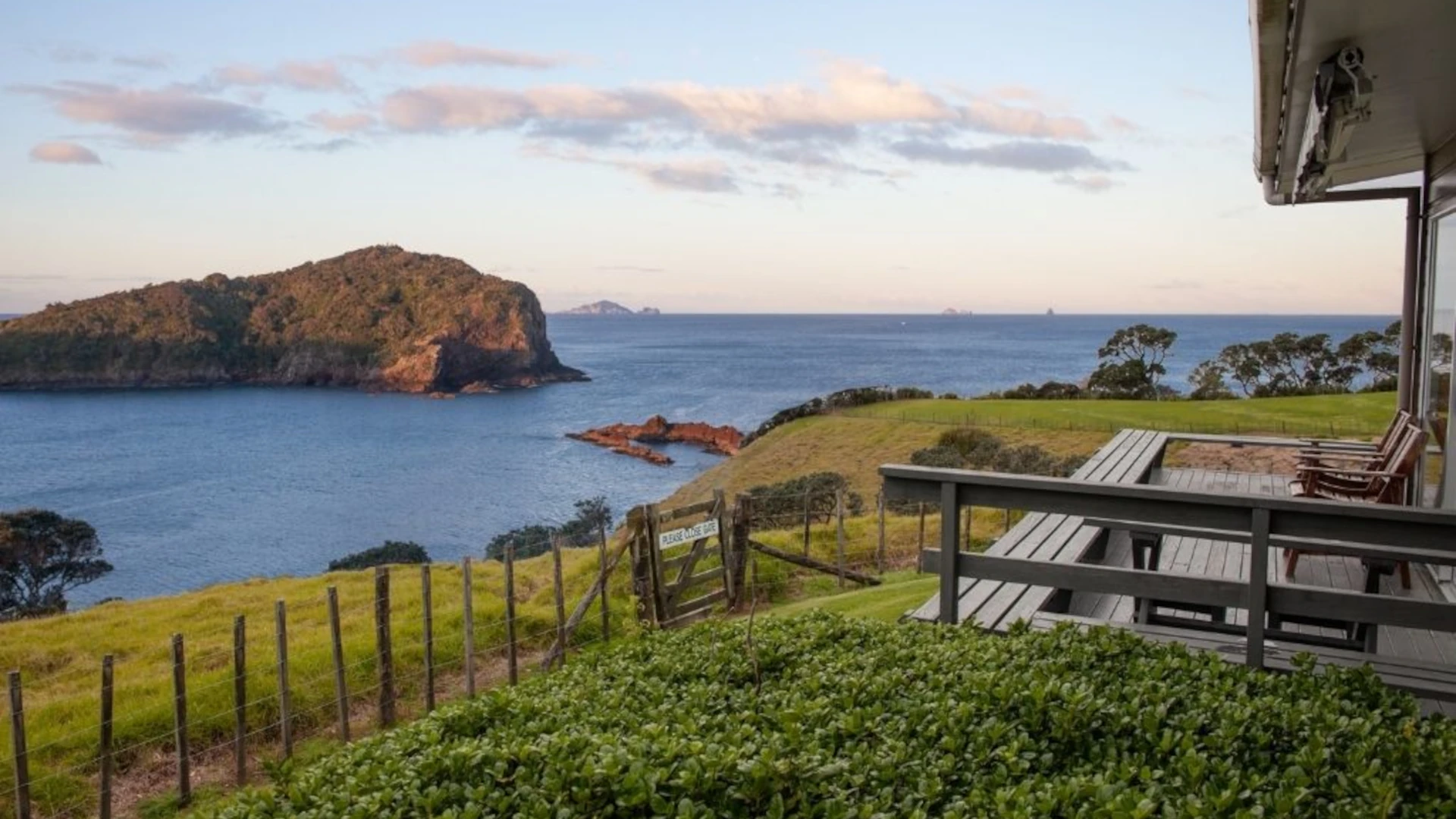
At Pacific Rendezvous, the fully self-contained villas are designed exactly for this kind of stay. Perched on a clifftop headland with views across Tutukaka Harbour to the Poor Knights Islands, every villa comes with a private patio or deck. It’s the kind of spot that becomes your favourite place on earth when the winter light is doing its thing over the water. The heated pool remains open year-round, the private spa is exactly what you want after a morning walk, and the onsite barista coffee means you don’t have to go anywhere until you’re ready.
For couples, a winter villa stay at Pacific Rendezvous is about as close to a perfect retreat as you’ll find within three hours of Auckland. For small groups, the multi-bedroom options offer space to spread out and the kind of shared experience – a BBQ on the deck, a competitive game of tennis, an evening spa – that makes a winter trip worth remembering.
What’s On and Open in Tutukaka During Winter
One of the concerns people have about visiting Tutukaka in winter is that things will be closed. The reality is more encouraging than you might expect.
Schnappa Rock Café at the marina is a beloved local institution and a genuinely great place for a post-walk lunch or an evening meal with a glass of something local – open through the cooler months. The Tutukaka Marina remains active year-round with fishing charters and a lively local boating community.
A short drive up the coast, Ngunguru offers cafés and a peaceful estuary that’s particularly lovely in the quieter months, while the 30-minute drive into Whangārei opens up a full city’s worth of dining, arts, and culture, including the striking Hundertwasser Art Centre, for days when the weather turns.
Winter also opens the door to one of Northland’s most underappreciated pleasures: stargazing. With minimal light pollution and long clear nights, the skies above the Tutukaka Coast are extraordinary. Step out onto your villa deck after dark and look up.
Make Pacific Rendezvous Your Winter Base
Tutukaka in winter rewards travellers who seek something quieter, more genuine, and more connected to the coast as it actually is – not as it appears in a summer Instagram post. Pacific Rendezvous is the perfect base for that kind of trip: a clifftop retreat with private beaches, ocean views, a heated pool, and self-contained villas that make you want to slow down and stay longer.
Whether you’re planning a winter escape for two, a small group getaway, or simply a change of pace from the city, the Tutukaka Coast in winter is waiting – and it’s quieter than you’d expect. Check Villa Availability →